Rising private school fees have become a major concern across South Asia. In a significant move, Nepal has tightened regulations on private school charges, while India is also witnessing increasing pressure for stricter fee control.
Here’s a clear breakdown of the latest developments and what they mean for parents.
Nepal Private School Fee Regulation
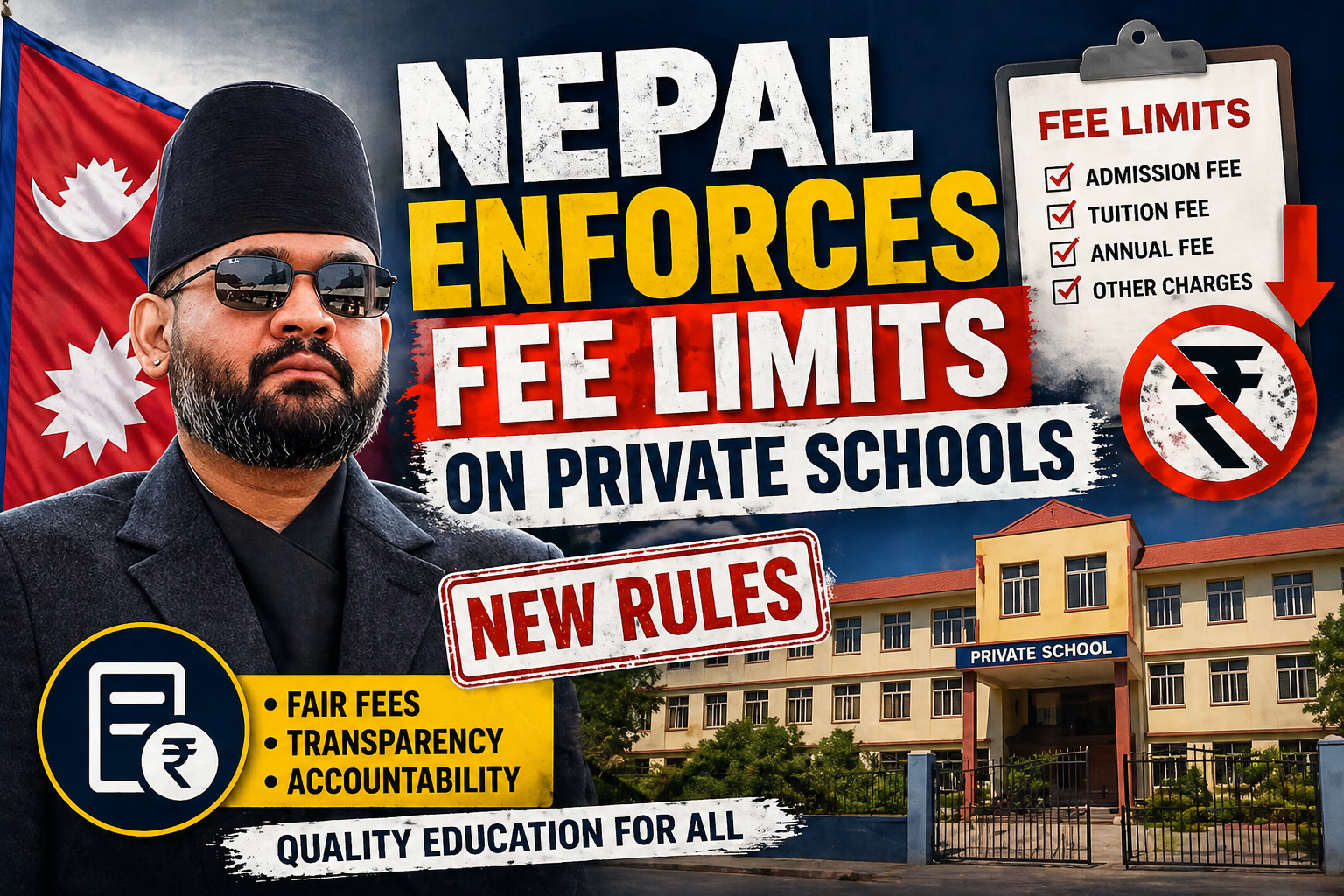
The government of Nepal has issued a strong warning to private schools against overcharging parents and violating prescribed fee rules.
Key Action Taken:
- Schools cannot charge fees beyond approved limits
- Strict compliance with the Institutional (Private) School Fee Determination Criteria Directive, 2015
- Admission allowed only after the academic session begins
- Local authorities directed to monitor implementation
This action comes after multiple complaints from parents about:
- Excessive fee collection before session start
- Repeated admission charges
- Unapproved fee heads
Fee Rules Set by Nepal Government
The directive clearly defines what schools can and cannot charge.
Allowed Fee Categories (14 heads include):
- Tuition fee
- Admission fee
- Examination fee
- Transportation fee
Key Limits:
- Tuition Fee: Can be charged only for 12 months
- Admission Fee:
- Maximum = 1 month’s tuition
- Charged only once
- Annual Fee:
- Maximum = 2 months’ tuition
These rules aim to prevent arbitrary fee hikes and hidden charges.
Strict Penalties for Violations
The Nepal government has warned of strong action against non-compliant schools:
- Mandatory refund to parents
- Fine up to Rs 25,000
- Possible cancellation of school licence for repeat violations
This signals a shift toward strict enforcement, not just guidelines.
India Also Facing Private School Fee Pressure
In India, rising school fees have also become a major issue.
Current Situation in India:
- Frequent parent protests over fee hikes
- Complaints about:
- Hidden charges
- Annual fee increases
- Lack of transparency
Government Response:
- Several states are considering or implementing:
- Fee regulation committees
- Caps on annual fee hikes
- Mandatory disclosure of fee structure
However, unlike Nepal, India still lacks a uniform national-level policy.
Nepal vs India: Key Difference
| Aspect | Nepal | India |
|---|---|---|
| Fee Regulation | Central directive enforced | Mostly state-level rules |
| Fee Limits | Clearly defined caps | Varies by state |
| Penalties | Strict (fines + licence cancellation) | Limited enforcement in many areas |
| Implementation | Active crackdown | Gradual reforms |
What This Means for Parents
In Nepal:
- Better protection against unfair charges
- Clear fee structure
- Right to refund in case of violations
In India:
- Growing awareness and activism
- Possible stricter rules in coming years
- Need to carefully review school fee breakdowns
Final Thoughts
Nepal’s move to strictly regulate private school fees sets a strong example in the region. With defined limits, enforcement, and penalties, it aims to bring transparency and fairness to the education system.
In India, similar concerns are pushing authorities toward tighter regulation, but a uniform system is still evolving.
For parents, the key takeaway is clear:
- Stay informed
- Question unclear charges
- Demand transparency
Frequently Asked Questions
Q1. What action has Nepal taken on school fees?
Nepal has imposed strict limits and penalties on private schools for overcharging.
Q2. What is the maximum admission fee allowed?
Not more than one month’s tuition, and only once.
Q3. Can schools charge annual fees?
Yes, but capped at two months’ tuition.
Q4. What happens if schools violate rules?
They may face fines, refunds, or licence cancellation.
Q5. Is India regulating school fees like Nepal?
India is moving toward regulation, but rules vary by state.
Disclaimer
This article is based on recent reports and government directives as of 2026. Policies may change, and parents are advised to check with local authorities or school administrations for the latest updates.